
Masonry, Concrete & Roofing in Richmond Heights
Richmond Heights is a mid-size eastern suburb with a character shaped by its 1960s and 1970s building boom. The city mixes residential neighborhoods of brick and frame homes with commercial corridors near the former Richmond Town Square area, creating a community where Karbella Construction serves both homeowners dealing with aging masonry and property managers maintaining commercial facades. The housing stock is predominantly ranch homes, raised ranches, and bi-levels built during the era when suburban expansion pushed east from Cleveland's inner ring, and the construction methods of that period — while solid — are now reaching the fifty-to-sixty-year mark where major exterior systems need attention or replacement.
The defining site condition in Richmond Heights is clay soil. The heavy clay subsoil that underlies much of the city expands when wet and contracts when dry, creating seasonal ground movement that stresses foundations, cracks concrete flatwork, and shifts masonry structures that weren't built on footings extending below the frost line. Driveways are the most visible casualty — we see Richmond Heights driveways that have settled two to three inches near the garage, cracked longitudinally down the center, or heaved at joints where tree roots have compounded the clay expansion problem. Karbella addresses driveway failure in Richmond Heights by removing the old slab completely, excavating and compacting the subgrade, installing a six-inch gravel base that provides drainage and load distribution, and pouring new concrete with fiber reinforcement and properly spaced control joints. This approach accounts for the clay soil behavior that caused the original failure.
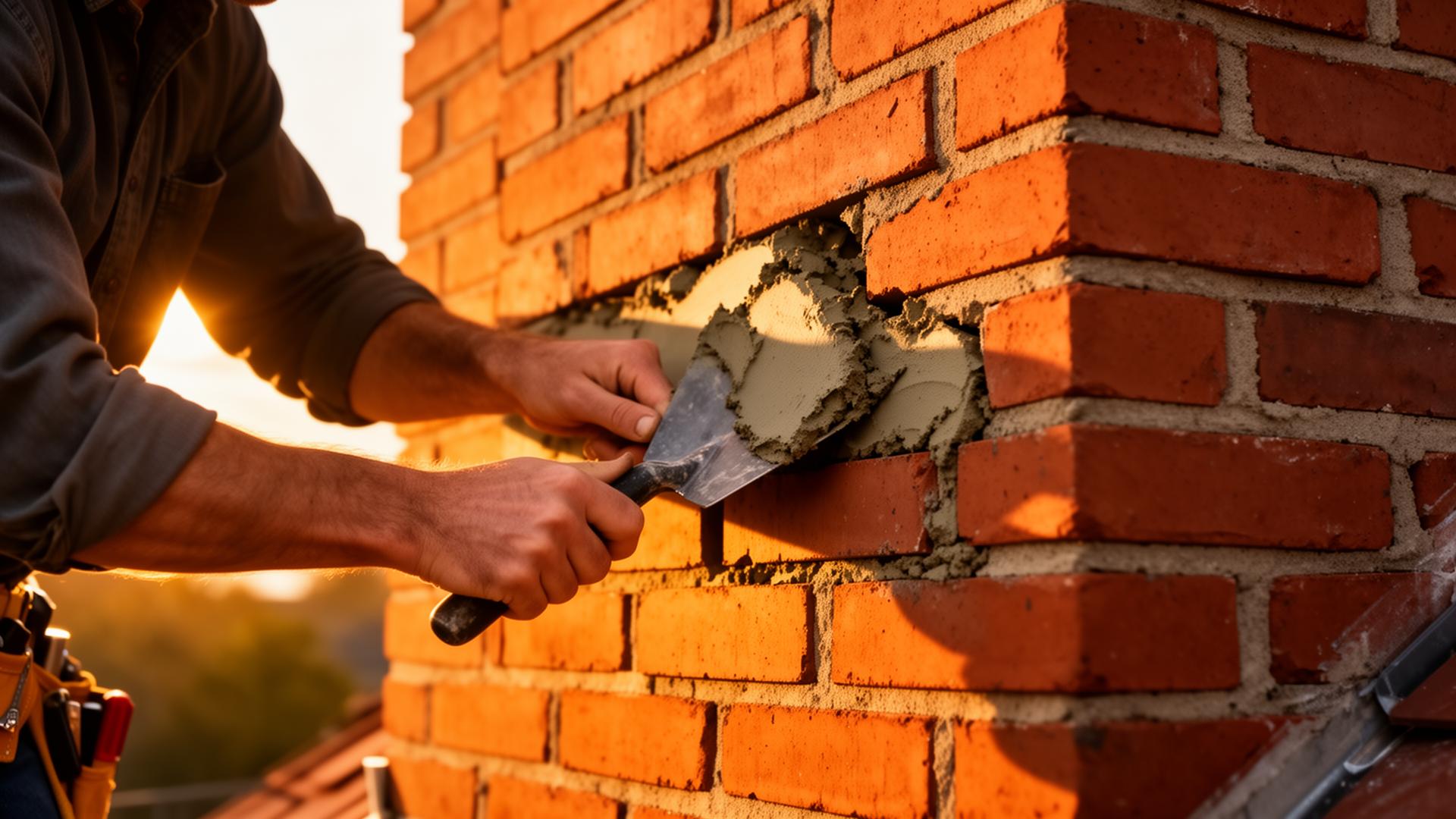
Tuckpointing on Richmond Heights homes typically involves the standard modular brick and block construction of the era. Many homes feature a brick veneer front facade with frame or block construction on the remaining three sides. The mortar on these front facades has been absorbing Cleveland's weather for half a century, and the joints on the most exposed sections — around windows, above the foundation line, and on chimney stacks — are usually the first to show significant erosion. Karbella repoints these areas with color-matched mortar, paying particular attention to the transitions between brick veneer and adjoining materials where differential movement opens cracks that allow water penetration into the wall cavity.
Richmond Heights chimneys exhibit the same age-related deterioration common across the eastern suburbs, but the clay soil adds an extra dimension. We've seen chimneys in Richmond Heights that have tilted slightly as the clay beneath the footing expanded and contracted unevenly over decades. A chimney that's visibly leaning — even a half-inch — needs structural assessment before any cosmetic repointing is attempted. Karbella evaluates chimney plumb on every inspection and recommends the appropriate level of intervention, from repointing and crown work on straight, sound chimneys to complete tear-down and rebuild on stacks that have moved off plumb.
Roofing in Richmond Heights is straightforward but important. The 1960s and 1970s homes here are on their second, third, or even fourth roof, and many still have inadequate attic ventilation by current code standards. Poor ventilation accelerates shingle aging from below, bakes adhesive strips, and promotes ice-dam formation in winter. Every Karbella re-roof in Richmond Heights includes a ventilation assessment, and we add ridge vent, soffit intake, or both when the existing system falls short. We strip all old layers, inspect and replace damaged decking, and install architectural shingles with manufacturer-backed warranties. For a free estimate on any masonry, concrete, or roofing project in Richmond Heights, call 440-742-2287.