
Masonry, Concrete & Roofing in Rocky River
Nestled between the Rocky River Reservation and the Lake Erie shoreline, Rocky River is a compact, walkable community of roughly 20,000 residents whose housing stock spans 1920s Tudor revivals, 1940s Cape Cods, and mid-century ranches along streets like Lakeview Avenue and Wagar Road. The city's proximity to the lake means it catches the full brunt of lake-effect moisture — heavy wet snow in winter, fog-driven dampness in spring, and wind-driven rain year-round. That microclimate is punishing on brick, mortar, and roofing materials in ways that communities even ten miles inland simply don't experience to the same degree.
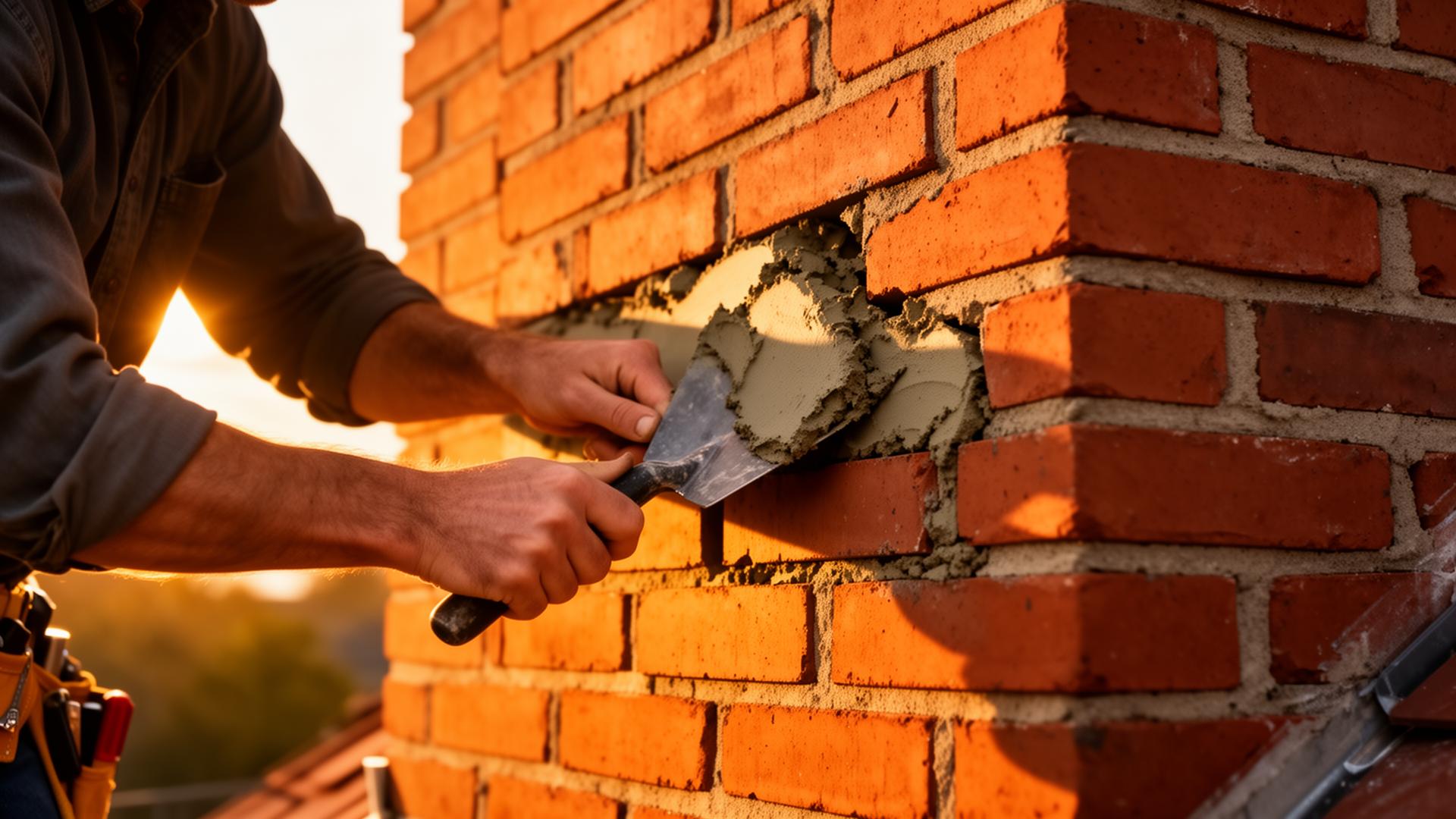
Tuckpointing in Rocky River requires an understanding of how persistent moisture accelerates mortar decay. Homes close to the river gorge see condensation and runoff patterns that concentrate water against foundation walls and chimney bases. Karbella's masons inspect not just the visible joints but also the less obvious areas behind downspouts, at grade transitions, and along parapet caps where water pools. We use high-performance Type S mortar on exposed chimneys and foundation courses where structural strength and water resistance are critical, and softer Type N blends on upper-wall courses to maintain flexibility.
Rocky River's Tudor-style homes are among the most architecturally distinctive in the West Shore suburbs, with their steeply pitched rooflines, decorative half-timbering, and prominent brick chimneys. Chimney work on these homes often involves rebuilding the decorative corbeling at the top of the stack — a detail that generic contractors sometimes skip or simplify. We preserve the original corbel profile because it's part of the home's character and, in Rocky River, it's something neighbors and prospective buyers notice.
Concrete driveways and walkways in Rocky River contend with salt spray carried on prevailing northwest winds off the lake. This airborne salt attacks the concrete surface even if the homeowner never applies deicer, causing surface scaling and pop-outs within fifteen to twenty years of the original pour. Our replacement pours use air-entrained concrete with a low water-cement ratio specifically to resist salt scaling, and we always apply a penetrating sealer as the final step.
For roofing, the combination of heavy snow loads and high winds off Lake Erie makes proper fastening and ice-dam protection essential. We install ice-and-water membrane along every eave, valley, and wall-to-roof transition, and use high-wind-rated shingles that meet or exceed code for Rocky River's exposure zone. Call 440-742-2287 or request a quote online — we typically return written estimates within one business day.